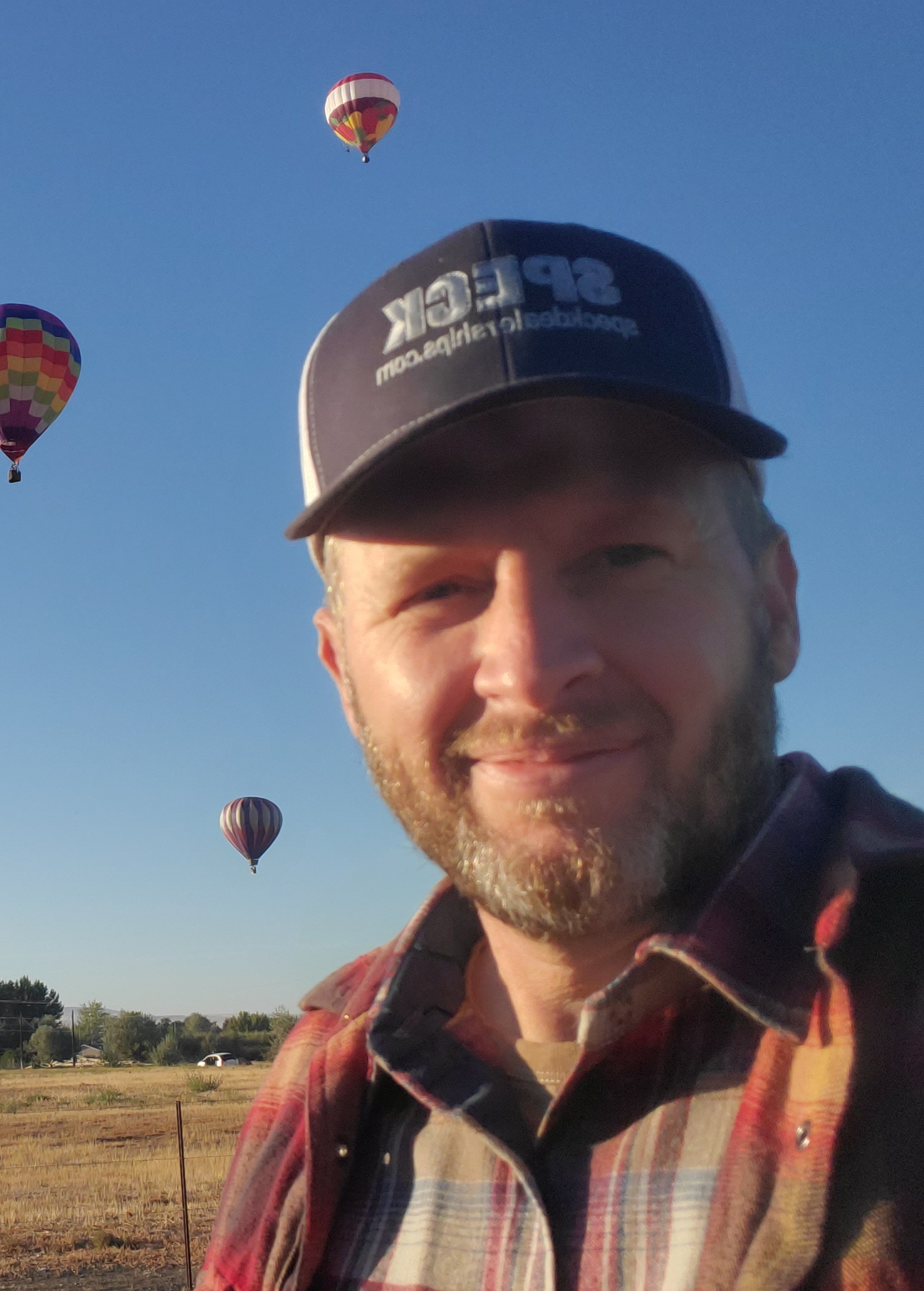
R. Troy Peters, P.E., Ph.D.
Professor and Director, Center for Precision and Automated Agricultural Systems, Dept. of Biological Systems Engineering
Irrigation Extension Engineer
Washington State University (WSU)
24106 N Bunn Rd
Prosser, WA 99350
Email: troy_peters@wsu.edu
Phone: 509-786-9247

Dr. Troy Peters has been affiliated with the Center for Precision and Automated Agricultural Systems for 20 years before becoming the director. Dr. Peters works in all crops and across a wide variety of climates and rainfall areas in Washington State. He is a world-renowned researcher and extension educator in the area of irrigation engineering. He is a licensed professional engineer and is located at the Irrigated Agriculture Research and Extension Center in Prosser, WA. He teaches an average of more than 30 extension workshops each year to educate growers and other irrigation professionals. The irrigation scheduler mobile app that he developed is being used in 12 western U.S. states and in two Canadian provinces. This application has been used at more than 10,000 fields for irrigation scheduling. Peters also created and maintains an irrigation website (irrigation.wsu.edu) that is widely used for its irrigation calculators. It includes tools to estimate crop water use and irrigation system design capacity based on historical average evapotranspiration (ET) for many different areas and crops. He has published over 100 peer reviewed journal papers and extension publications. A major focus of his extension program is low elevation spray application (LESA), a modification to center pivots that increases irrigation application efficiency by 15-20% and uses significantly less pumping energy. Thanks to his efforts, these systems are being installed throughout the west. Peters is also researching the use of artificial intelligence and machine learning to interpret soil moisture sensor signals for irrigation automation, quantifying the suppression of ET from sprinkler water losses, irrigation water quality measures, remote detection of water stress, and ET using satellites and drones. His latest work has been on heat stress modeling and mitigation using overhead sprinklers in tree fruit and cane berries, water stress detection, consumptive use estimation methods, and irrigation efficiency. His graduate students have gone on to lead teaching, research, and extension programs at universities all over the world.